

Organic Cereal Rye 'Dankowskie Opal'
A population rye variety with high and stable yields. 'Dankowskie Opal' has very good milling qualities but being high tillering it is also good for use as a grazing rye. Cereal Rye (Secale cereale) is extremely effective at protecting soil over winter and preventing leaching. Ideal also for early, high energy and high yield cuts as silage, strip or zero grazing. Can be sown later than any other covercrop. Contact for bulk orders. More details below.

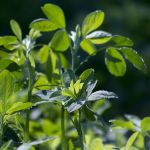
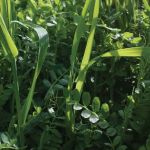
Cereal Rye (Secale cereale) 'Dankowskie Opal'
- Population rye variety with high and stable yields
- Medium high plants with good lodging resistance
- Good diseases and sprouting resistance
- Very good milling and baking parameters
- Very good adaptation ability to different climate and soil conditions
- Recommended for poorer soil cultivation. However, due to stiff straw it can be successfully cultivated on good soils as well.
- Early variety with superb tillering capacity
- Recommended sowing rate in optimal sowing term is 260 germinating seeds per 1 m2 (ca. 80-90 kg/ha), which is 2 sowing units. In case of early sowing and intensive cultivate technology, the rate should be decreased by 10%. In case of late sowing, the rate should be increased by 10%
- Click here for more information on Dankowskie Rye
Cereal Rye is one of the most useful green manures as it can be sown later than any other cover crop. It can be sown after cash crops that are still being harvested in autumn. It also has an extensive root system and is one of the best crops at preventing nitrogen from leaching during the winter. It will add lots of biomass for the following crop and is not related to any cultivated crops meaning it can be used anywhere in crop rotation plans.
- Rye is an excellent nitrogen lifter and it can lift and release up to 90% of nitrate to the next crop.
- Deep roots help to break up heavy soils and improve soil structure.
- Suppresses weeds.
- It suits most soils and copes especially well with heavy clay ones.
- Can be used for spring fodder or silage.
- Dig into the soil in early spring - the foliage can be strimmed off and composted and the roots turned in with a sharp spade.
- As green manure foliage decomposes it releases compounds that can inhibit germination. This is especially true of rye. It is therefore not advisable to sow seeds immediately after digging in a green manure. Wait with sowing of small seeds for at least 3 weeks. Transplants and large seeded crops are not effected.
| SKU | RYOPA |
|---|---|
| Persistence | 1 Year (Winter Hardy) |
| Single Variety or Mix | Single Variety |
| Special Features | Suitable for Grazing, Deep Rooting, Fast Establishment, ACRES Scheme |
| Brassicas | No |
| Grasses | No |