Oats - From Seed to Food
Written by Elmer Koomans
Oats - From Seed to Food
History
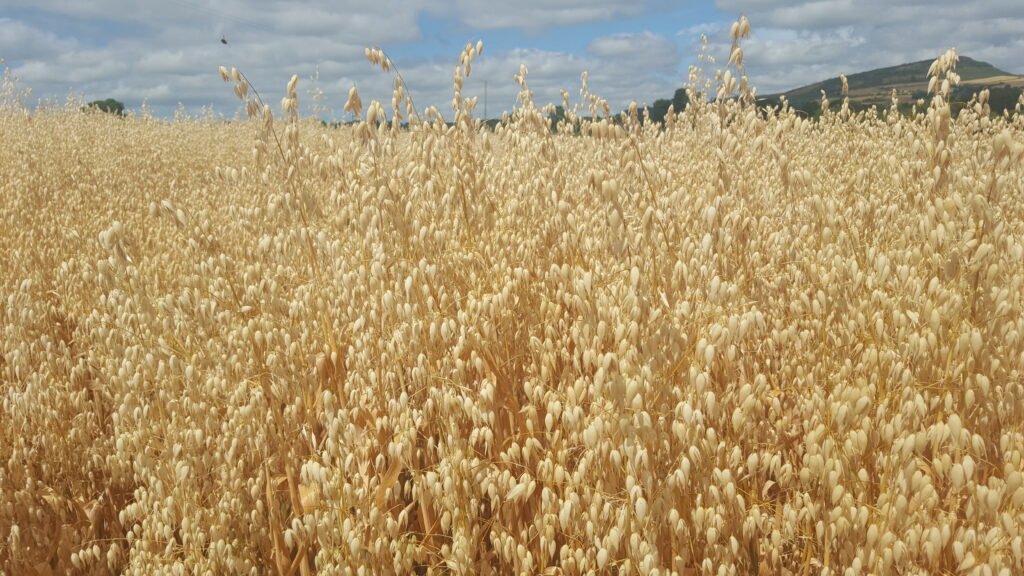
From as early as the Bronze Age oats has been a very important tillage crop in Ireland as a feed for horses especially, but also other animals and of course human consumption. Oats thrive in our cool moist maritime climate as it needs more moisture than other cereal crops, it is also less demanding on the fertility of the soil than other cereal crops. By the middle ages oats had become the most important cereal and by the 19th century the oat acreage exceeded 650,000 hectares(1,625,000 acres). By 1916 the acreage had reduced to a still significant 294,000ha. (Source: Teagasc)
Since the invention of the combustion engine there was less use for horses and less oats were needed; at the moment only around 24,000 hectares of oats are grown in Ireland of which 2500 hectares are grown organic. Oats is the most grown organic tillage crop in Ireland as it makes up around 60% of the total organic tillage acreage.
Certified Seed
Fruit Hill Farm is one of the main suppliers of certified organic seed oats to Irish organic farmers. We are only a very small part in the whole journey from breeding a good variety of oats to having a bowl of porridge or a pack of oat drink on the table.
- First of all there are the breeders; they focus on producing new varieties that will have better yields, bigger seeds, better disease resistance, better lodging resistance etc. This process takes years; it can take at least 10 years before a new crossing becomes a variety, is given a name and will be available for growers to use. To make the grade, a new variety has to be better in a few ways than existing varieties. At the moment we supply 2 Irish grown varieties to the farmers: Husky and Enya, both are approved by the millers like Flahavan’s, White’s and Tirlán for processing. There are smaller processors in Ireland like Ballybrado, Killbeggan Organic Foods and The Merry Mill, the latter produces Gluten Free Oats.
- Then there are the seed growers that multiply the varieties to a very high standard, the fields will be tested for suitability and they work together with the Department of Agriculture, Food and Marine to make sure all care is taken to produce a certified seed crop.
- Rigorous pre and post harvest inspections by officials from DAFM will ensure that the seed will be 100% free of invasive and noxious weeds like Wild Oats, Blackgrass and Sterile Brome. Purity and quality will be tested too.
- Once the final tests for germination and purity have been done the seed can be certified and get the official blue label from DAFM and the seed can be supplied to merchants and farmers.
- Farmers grow the oats for one of the millers and they will supply the shops with premium oat products.
Varieties
Husky and Enya work well in Ireland, but in other countries farmers and processors may prefer other varieties. Environmental factors like season length, rainfall, temperature etc. will play significant roles in determining which oat variety is the best for the specific growing conditions.
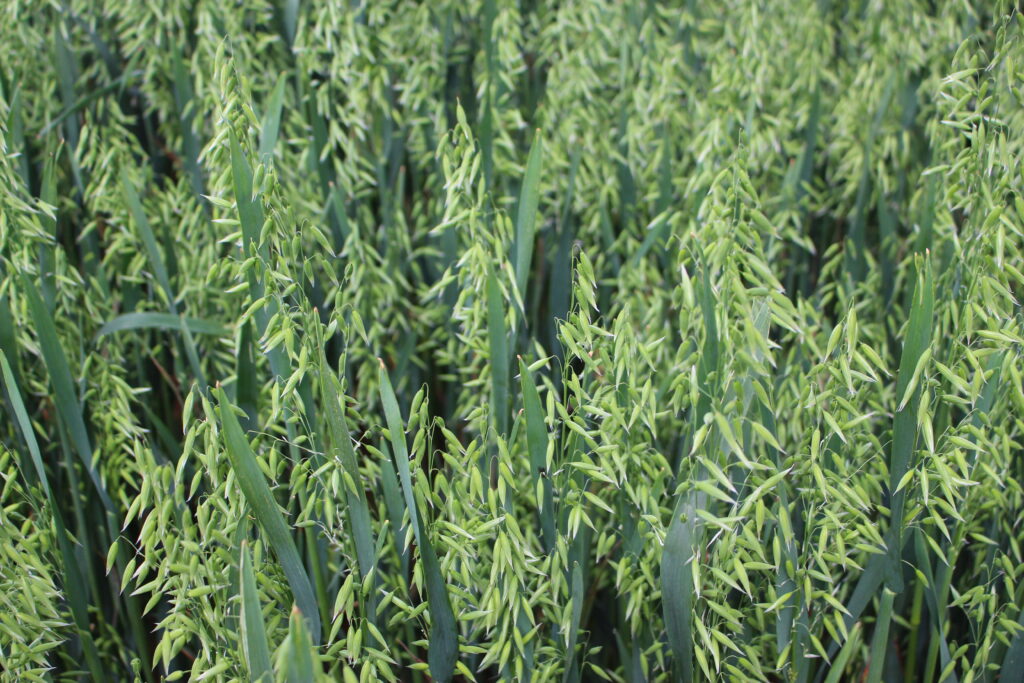
Due to the Irish mild Winters it is possible to sow certain Spring varieties in the Autumn. These Autumn sown crops give the highest yields and best grain quality compared to true Winter oat varieties. The earlier harvest of an Autumn sown crop provides the opportunity to choose from a wider range of species when sowing covercrops. At the moment Husky is the most reliable variety for Autumn sowing, but growers have had good success with Enya too. The last few Winters have not really tested newer varieties at Winter hardiness.
This growing season half of all the oats was sown in the Autumn and the rest in Spring. It is important not to sow too early in Autumn as an early sown crop will be more susceptible to frost damage. Sowing from mid October is advisable. In years with a wet Autumn this can be a problem and sowing may have to be postponed till Spring.
There are a few new varieties on the horizon; in 2027 Seedtech will introduce Jacky which can be sown in Autumn or Spring and will be suitable for feed and human consumption. Goldcrop has a variety called WPB Fiona in the pipeline and it will be a dual purpose oats as well.
Potential of Oats
Teagasc did research at Grange and they found that finishing beef cattle performed just as well when their grass silage diet was supplemented with oats or with barley. Oats are higher in fibre and fat, lower in starch and slightly lower in protein than barley, but the animals performed the same.
These findings are important as it shows there is room for Oats in (conventional) rotations, which can reduce the reliance on imported feedstuffs, which can improve the overall environmental sustainability.
In the Irish organic sector the situation is different, too many subsequent crops of oats are already in the rotation as there is such a good market for organic oats due to the high demand from the millers for human consumption oats. It is the most secure and financially rewarding tillage crop for Irish organic farmers. There is no reliable market yet for wheat, barley, triticale, rye or legume crops like peas or beans. Hopefully in the coming years this will change.
When Oats are grown too often subsequently or in a rotation, there is the risk of disease buildup like Oats Mosaic Virus, Take-all, Fusarium etc. So it is important to have break crops, non-cereal covercrops, 2 year clover leys etc in between crops of oats.
Oats Health Benefits
Oats are making a comeback as we now realise (again) the fantastic nourishment and health benefits it provides. Oats are a slow release source of energy, they are high in fibre, low in salt and sugar, low in saturated fat and rich in a variety of vitamins and minerals. (Source: Flavahan’s)
Oats grow really well in Ireland, which reduces food miles and it suits organic farming methods as it doesn’t need very high inputs regarding fertilisers etc. So altogether it is a very sustainable crop!
For more technical information on growing oats please see this great article by Tim O Donovan from Seedtech written for Organic Matters magazine. We share with permission from Tim and the IOA.