
Seaweed for Soil, Plant and Animal Health
Seaweed for Soil, Plant and Animal Health
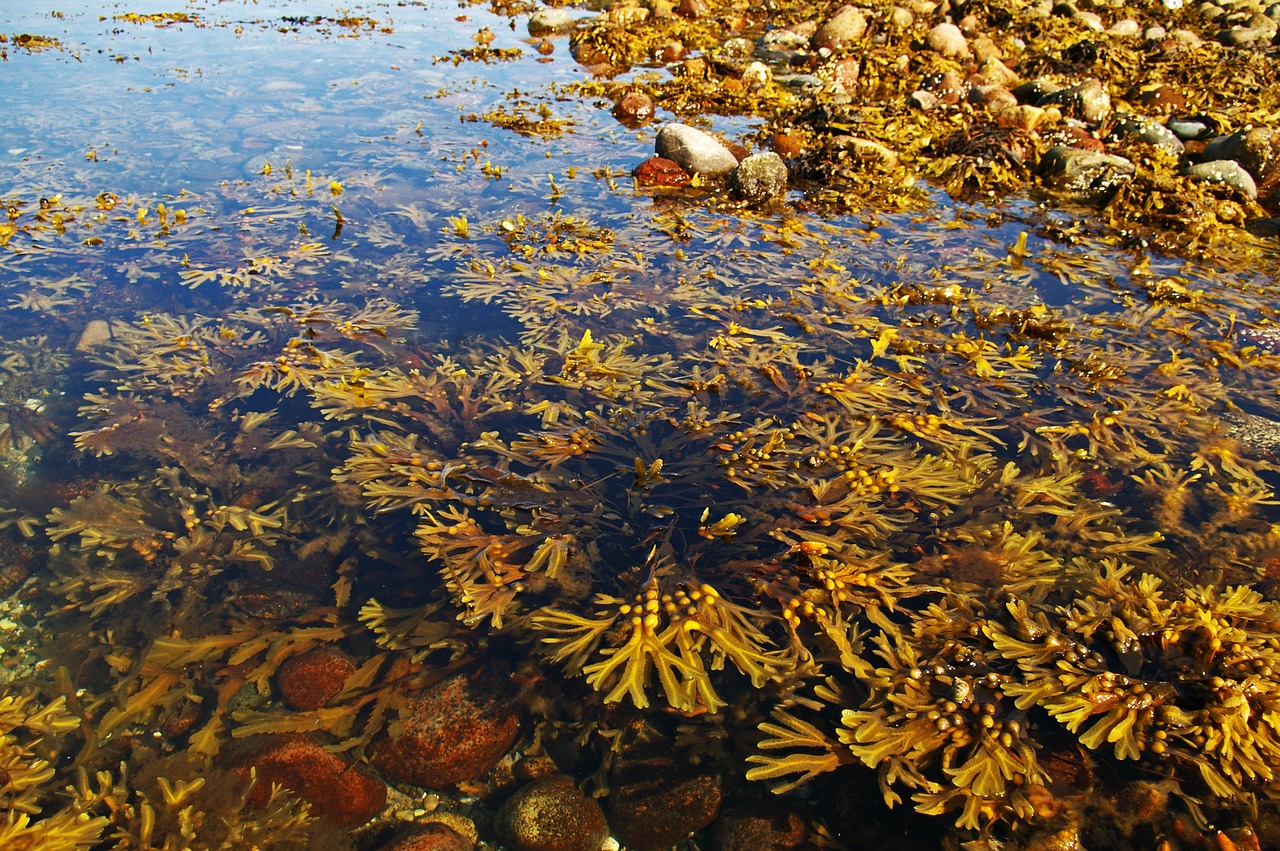
Seaweed has been used for centuries to improve soil and feed livestock. The clean waters of the Irish west coast are full of strong growing healthy seaweed plants. They absorb nutrients from the sea as well as minerals and trace elements washed into the sea in coastal areas. This abundance of nutrients makes Seaweed one of the richest plants on our earth: minerals, trace elements, vitamins - even natural growth promoters have been discovered in seaweed. This is what makes seaweed so valuable for us and equally for animals and plants.
Benefits of Seaweed For Plants
- Seaweed contains almost every micro-nutrient in a fully chelated (immediately available) form. It is also full of carbohydrates, which plants use as a building block. Seaweed has 60 trace minerals and ready-to-use nutrients including nitrogen, potassium, phosphate, calcium, boron, potash and magnesium.
- Alginate (a water-insoluble gel) is present in seaweed at levels of between 16% and 26%. Microbial population size has been found to increase dramatically in the presence of alginate gels. This is why seaweed is an excellent compost activator - the rate of composting is accelerated by the increased microbial activity. Alginates also absorb large volumes of water thus increasing the moisture in the soil.
- Besides aiding soil nutrition, seaweed also stimulates soil bacteria while increasing soil structure, aeration, and moisture retention. Additional effects on plants are improved seed germination, increased nutritional value, more extensive root systems, and a greater resistance to pests like nematodes. Regular dressings with seaweed promote healthy growth and increased yield in fruit and vegetables, and longer lasting, richer coloured flowers.
- Another major component in seaweed is the hormones. The main hormones in seaweed are auxins, cytokinins, betaines and gibberellins. These hormones are essential to plant health. Plant hormones control the speed of growth, initiate basic growth processes, stimulate root formation and help the plant when under stress.
- Fresh seaweed makes wonderful mulch. Like all mulches, fresh seaweed helps to keep soil moist thus reducing your need to water the garden. An application of seaweed will reduce how often you need to weed. It contains no weed seeds.
- Seaweed is a useful form of pest control. Slugs especially hate seaweed because of its sharp edges and salt. Birds and other garden pests dislike it for the same reasons.
- Seaweed also helps aerate the soil just like peat moss does, but it has the added benefit of delivering nutrients and minerals and being sustainable.
Benefits of Seaweed for animals
- Being totally natural and of vegetable origin seaweed is easily digested and is safe to feed to animals of all ages.
- Seaweed builds resistance to disease by ensuring a complete balance of micronutrients.
- The organic trace elements found in seaweed are more readily assimilated than in synthetic form.
- Seaweed assists nutrient absorption, healthy growth and animal performance. It provides essential roughage and contributes to maintaining healthy intestinal function.
- Adding seaweed meal to livestock feed can substantially reduce methane emissions from cattle. Please see article in Irish Times.
Collecting And Using Seaweed in the Garden
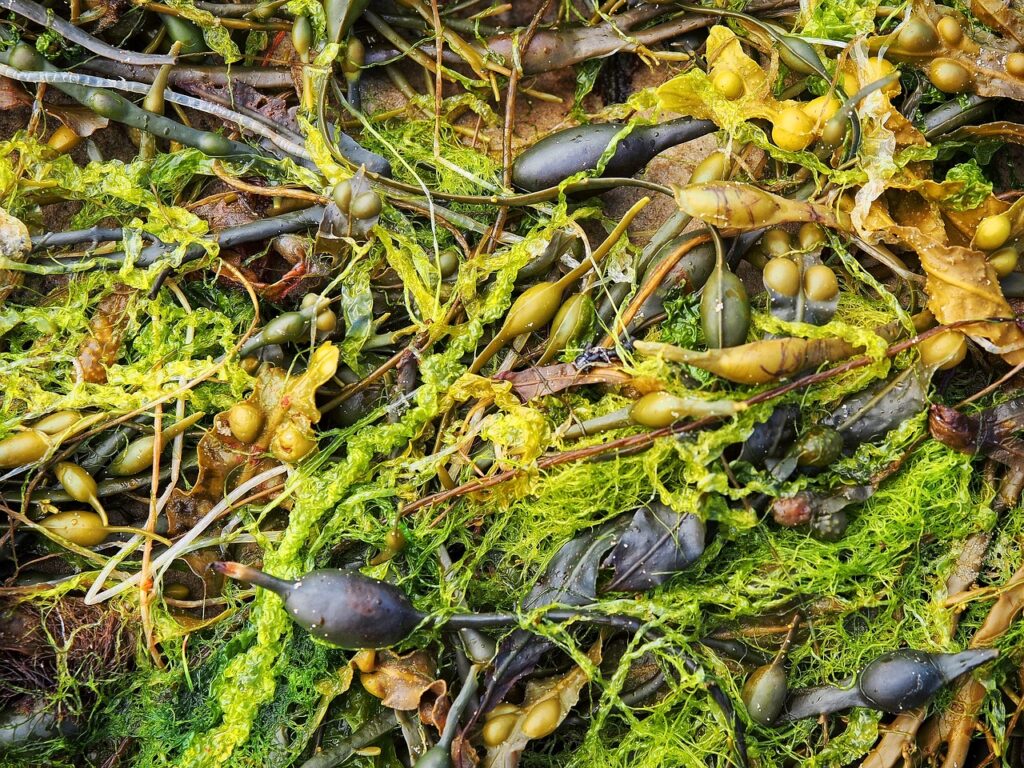
It is very important to only collect washed up seaweed as it's not sustainable for everyone to go around harvesting it. Minimise your impact by selectively collecting from various areas. Each patch of seaweed serves as a vital source of nourishment and refuge for numerous small marine organisms. Ensure to gather no more than one-third of the seaweed from any given patch before relocating to a different spot.
Seaweed can be collected and added directly to the garden, turning it in with a fork and letting the soil do the rest - this is best done after the seaweed has been thoroughly dried.
Seaweed can also be composted – it is important to incorporate other matter with it to bring air into the heap. On its own the seaweed bogs down quickly into a thick slime, impermeable to gas exchange, leading to anaerobic digestion and very slow rotting, smelly compost.
Fresh seaweed also makes a very good mulch. Be sure to use a good thick layer as it shrinks quite quickly after a few dry days. It is very useful for covering Green Manures if you do not want to dig them in.

Our Seaweed Products
Our range of seaweed products includes seaweed meal, dust, a concentrated liquid seaweed and a mineral lick. The seaweed used is Ascophyllum Nodosum or knotted wrack which is harvested from the West coast of Ireland.
The seaweed is harvested at low tide, when the shore is most exposed. Ascophyllum attaches itself to rocks on the seashore, and is hand harvested using a sharp knife or sickle. Care is taken not to cut the entire plant, allowing 15-20cms to remain attached to the rock. This traditional harvesting is carried out in strict rotation to allow the plant to regrow, with harvesters only returning after three to five years.
Seaweed Meal
Seaweed that has been dried and crushed. A very beneficial animal nutrient supplement and excellent in the garden also. Available in 25kg or 4kg bags.
Seaweed Dust
A finer particle than the seaweed meal, making it easier to mix through the soil. Available in 25kg or 4kg bags.
Health-Sea Liquid Seaweed
A concentrated liquid seaweed extract. Available in 1lt, 5lt and 20lt containers.
Seaweed Mineral Lick
This animal lick is used for boosting the nutrient intake of cattle, calves and sheep. Available in 12kg and 20kg buckets.