
Riparian Buffer Zones
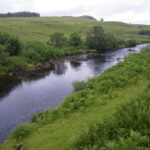

What is a Riparian Zone?
The riparian zone or margin is the area along the edge of a river or stream bank. In agriculture these areas of land are often of little use as they are prone to flooding or are often too wet to cultivate. There’s also a risk of the bank subsiding under machinery or from animals accessing the river for drinking.
This area of land is where any surface or subterranean water carrying nutrients from the surrounding fields can enter the watercourse.
Loss of nutrients especially nitrogen and phosphorus from the soil ending up in water bodies causes acute or prolonged damage to the surrounding environment. Something that Ireland is particularly prone to due to large amounts of annual rainfall.
What is a Riparian Buffer?
A riparian buffer is a strip of trees and vegetation along the edge of the watercourse and can also be targeted in key areas along the margin that are at risk of becoming breakthrough points, i.e.places where nutrient loss is most likely. Land that approaches a watercourse at a slope is especially susceptible to nutrient loss and riparian erosion.

Organisations such as Teagasc and the Environmental Protection Agency (EPA) have been researching the implementation of buffer zones in order to help target areas where they are needed. This allows for efficient placement and reduces the amount of investment needed.
How Do They Work?
The buffer zones help in a number of ways.
- The roots of plants and trees keep the riverbank stable, slowing erosion.
- Plants and grasses in the area take up excess nutrients that flow over or under land towards the water body which helps to reduce the incidence of algal blooms.
- Trees and shrubs growing closest to the water's edge provide shade and nutrients for aquatic life and cools the water temperature.
- Vegetation can act as a windbreak protecting crops, as well as uncovered soil from evaporation.
- Established vegetation provides habitat for native species helping to promote biodiversity.
The area must be fenced off to keep livestock from entering, and no chemical fertilisers or pesticides can be spread within a minimum of 2m for chemical fertilisers and 5-10m for organic fertilisers.
Why Use Them?
The presence of excess nutrients in waterways, or the addition of pesticides, has been linked to issues such as algal blooms, eutrophication and fish kills. Sediments from farmyards and agricultural activity can have a lasting effect on water quality. Sediment getting into the watercourse and filling the gravel beds can block up the spawning grounds of fish.
Globally the world is experiencing rapid species decline and biodiversity loss, the presence of buffer zones can play a part in creating natural corridors and safe havens for native flora and fauna.
With increasing incidents of heavy rainfall over short periods, the presence of vegetation in riparian areas can play a part in reducing flood pressure downstream.
A properly utilised riparian buffer can stop up to 80% of excess nutrients from entering waterways. If combined with sediment traps and proper drainage some of this can be captured and reapplied to agricultural land.
The video below shows why Riparian Buffer Zones are so valuable.
Schemes
The ACRES scheme supports small scale planting of Riparian woodland, if under 1 hectare on each holding.
Riparian grassland is also supported by the ACRES scheme. For guidance on sowing a grass mix to create Riparian Buffers Strips/Zones for Arable or Grassland under the Acres scheme please see here on page 86-90. We supply organic seed for this scheme.
Grants are available for the Native Tree Area Scheme (NTAS) under Ireland’s new Forestry Programme 2023-2027. Farmers can plant up to 1ha of native woodland without a licence, or up to 2ha if they have a suitable watercourse along which to plant a riparian small-scale native woodland.
For more information:
https://acresireland.ie/action-projects/npi-riparian-margin/
https://www.teagasc.ie/crops/forestry/grants/native-tree-area-scheme/
https://www.ifa.ie/forestry-programme-2023-2027/
Where Can You Buy Trees?
Future Forests based in West Cork, supplies native trees nationwide (ACRES approved supplier).
Cullen Nurseries located in Hacketstown, Co. Carlow supplies native trees and hedging all over Ireland and Northern Ireland (ACRES approved supplier).
Trees Please is a Cork based voluntary organisation who aim to propagate, distribute and plant as many native trees as possible.
Wild Oaks Tree Nursery based in County Clare also supplies Native Trees.
Trees on the Land is another West Cork organisation who aim to establish young native trees across the 32 counties of the Republic of Ireland and Northern Ireland.
Hometree is dedicated to establishing and conserving permanent native woodlands in Ireland, promoting land regeneration and biodiversity through afforestation, ecological restoration, and education. The organisation has also established an organic tree nursery, with all profits reinvested to support its mission of creating and preserving permanent native woodlands across the country.
Or contact your local nursery to find out more information.