Potato Related Terminology
Potato Related Terminology
Potato cultivation includes many specialised terms that can be confusing for new growers. Here’s a simple guide to some common potato-growing terms:
Tuber
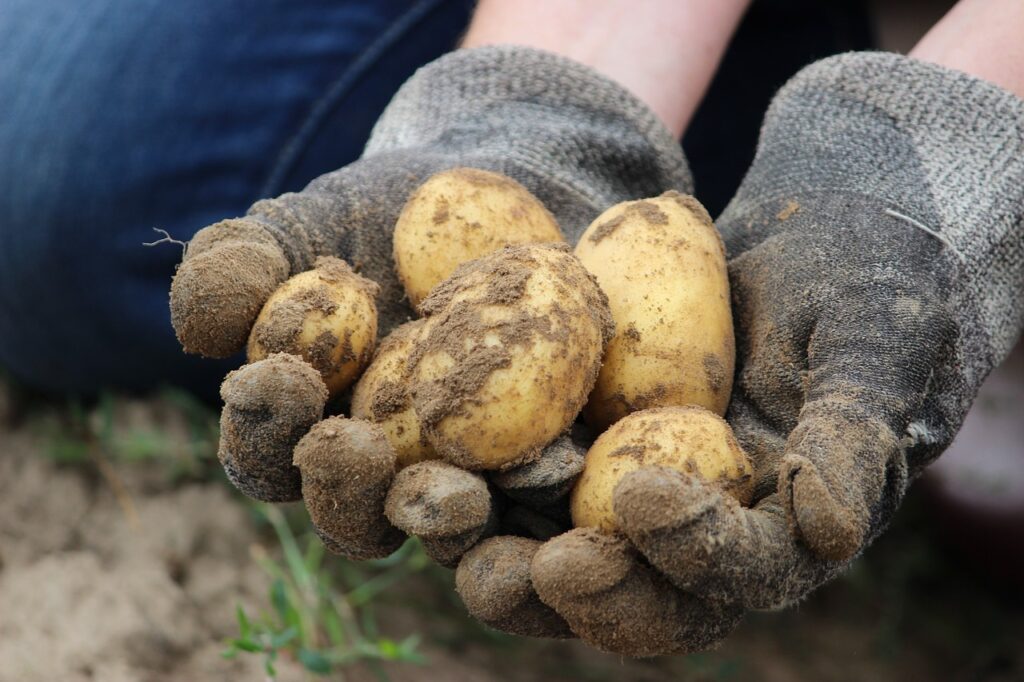
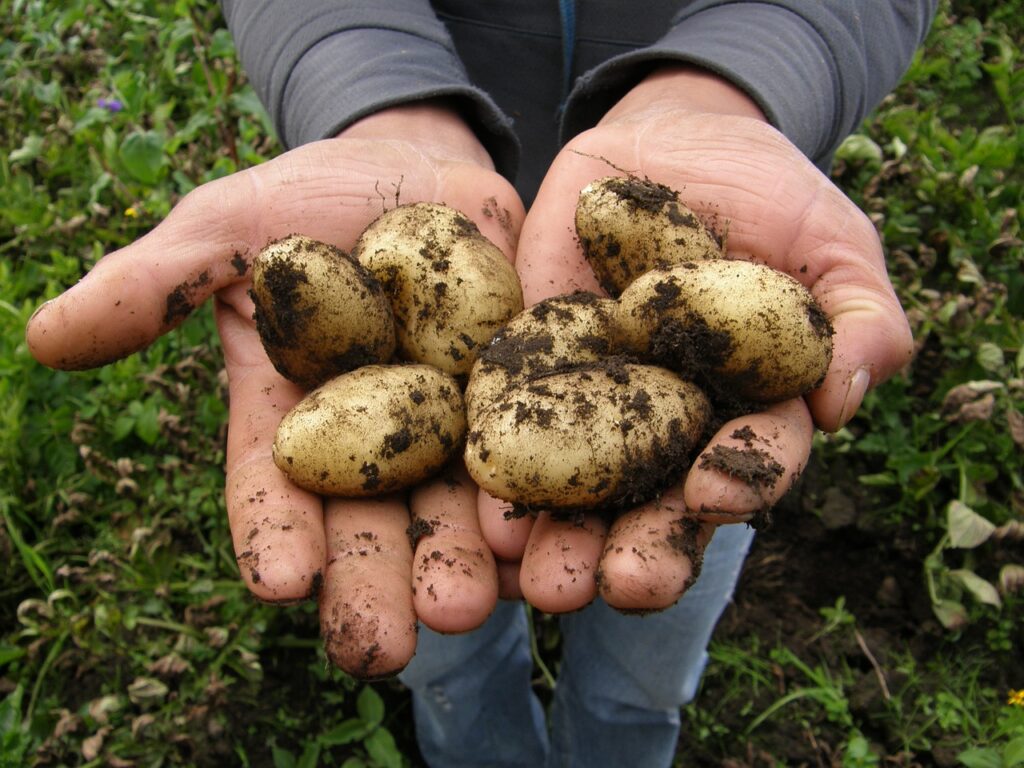
A tuber is the thickened, underground storage organ of the potato plant, where starch is stored. This is the edible part of the potato plant.
Eyes
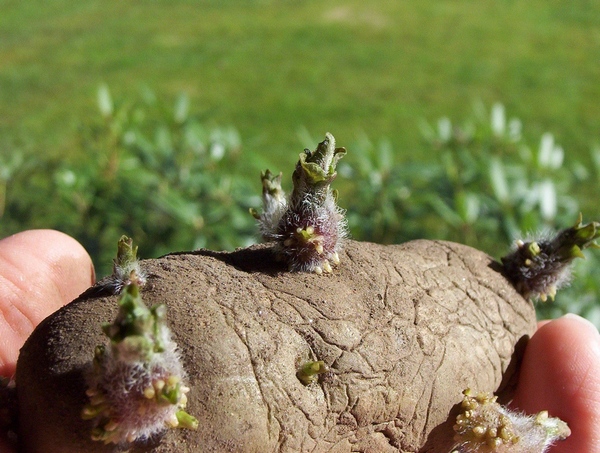
An eye is a small bud or node on a potato tuber where new shoots (or chits) emerge. Each eye has the potential to grow into a new plant.
Chit
Chitting is the process of encouraging seed potatoes to sprout before planting. It involves placing seed potatoes in a light, cool environment to produce strong, short sprouts, which can lead to earlier harvests.
Tuberisation
Tuberisation is the process where the plant begins to form tubers, generally in response to environmental cues, such as day length and temperature.
Haulm
Haulm refers to the above-ground parts of the potato plant, including the stems and leaves. Removing the haulm, known as haulm destruction, is done to stop growth and harden the tuber skins before harvest.
Earth Up
Earthing up involves mounding soil around the potato stems, this knocks back any small weeds that may have started growing, supports the plants as they grow and increases the yield of the maincrop varieties. The extra soil also protects developing tubers from sunlight, which reduces the risk of potatoes going green. Green potatoes are not suitable for consumption due to the presence of solanine, which is considered a neurotoxin.
Cure
Curing is the process of allowing freshly harvested potatoes to rest in a warm, humid environment to toughen their skins. This “skin set” reduces moisture loss and helps prevent disease, making them suitable for longer storage.
Early
Early potatoes are fast developing varieties that can be harvested in late spring or early summer, around 15 - 16 weeks after planting. Their yields are lower and are often smaller in size and and can have a thinner, more delicate skin
Second Early
Second early potatoes are harvested around 16-17 weeks after planting, following early potatoes. They are typically larger and are harvested in early to mid-summer.
Maincrop
Maincrop potatoes are varieties that take around 18–20 weeks to mature and are harvested in late Summer or Autumn. They give higher yields and are often larger tubers, with thicker skins, and are suitable for storage.
Determinate and Indeterminate Varieties
Determinate varieties grow tubers in one layer and have a limited yield, but mature fast. Indeterminate varieties will produce potatoes throughout the soil, continue to grow over a longer period and yield a larger harvest, but need more earthing up to protect the tubers from going green.
Certified Seed
Certified seed potatoes are grown and inspected according to strict guidelines to ensure they are disease-free and of high quality. They are commonly used to produce healthy potato crops.
Conventional Untreated
Conventional untreated potatoes are grown using standard farming practices without the application of post-harvest chemical treatments, like fungicides.
Blight
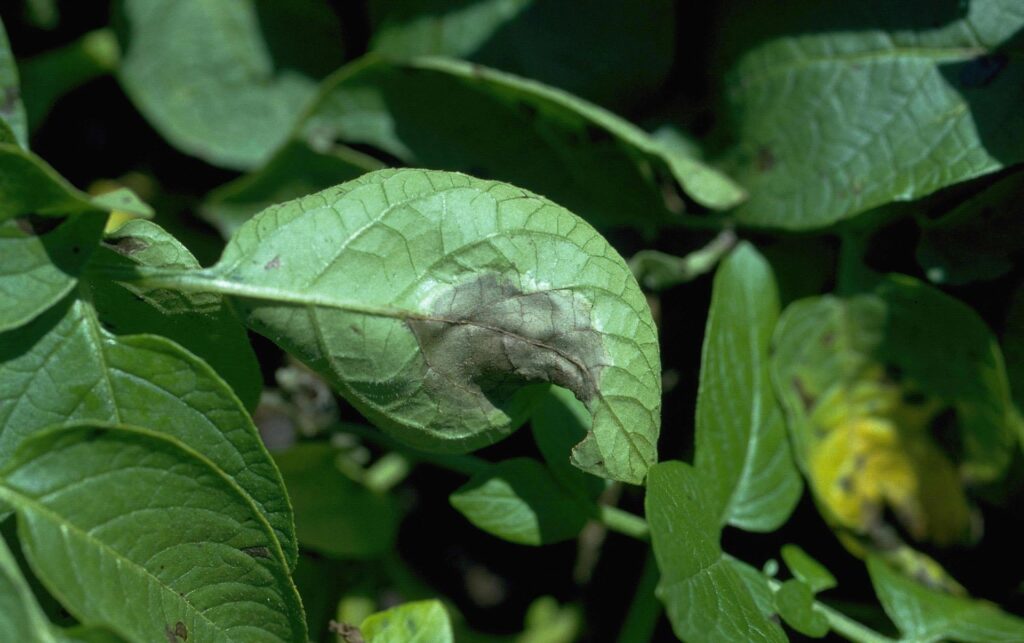
Blight is a fungal disease caused by Phytophthora infestans that affects potato plants. It causes dark, watery lesions on leaves and tubers, leading to crop loss. Late blight is particularly devastating and is most prevalent in warm, humid conditions.
Scab
Scab is a bacterial disease, often caused by Streptomyces scabies, that produces rough, corky patches on the potato's skin. While it affects appearance, it doesn’t usually impact flavour or yield. Fresh manure, lime and dry conditions can cause scab.
Y Virus
Potato Y Virus (PVY) is a plant virus that causes mosaic patterns, stunting, and yield reduction in potato crops. It is mainly spread by aphids and affects plant health and tuber quality.
Black Spot
Black spot is a condition where bruises appear on the potato flesh after harvesting, often caused by rough handling or mechanical damage. It is not a disease but affects appearance.
Greened or Green Skin
Green skin forms on potatoes when they are exposed to sunlight, which causes a build-up of solanine, a toxic compound. Greening is prevented by keeping tubers covered with soil or stored in the dark.
Hollow Heart
Hollow heart is a physiological disorder where small hollow cavities form inside the potato tuber, often due to inconsistent growth or environmental stress. Copious rain after drought can cause this.
Wireworm
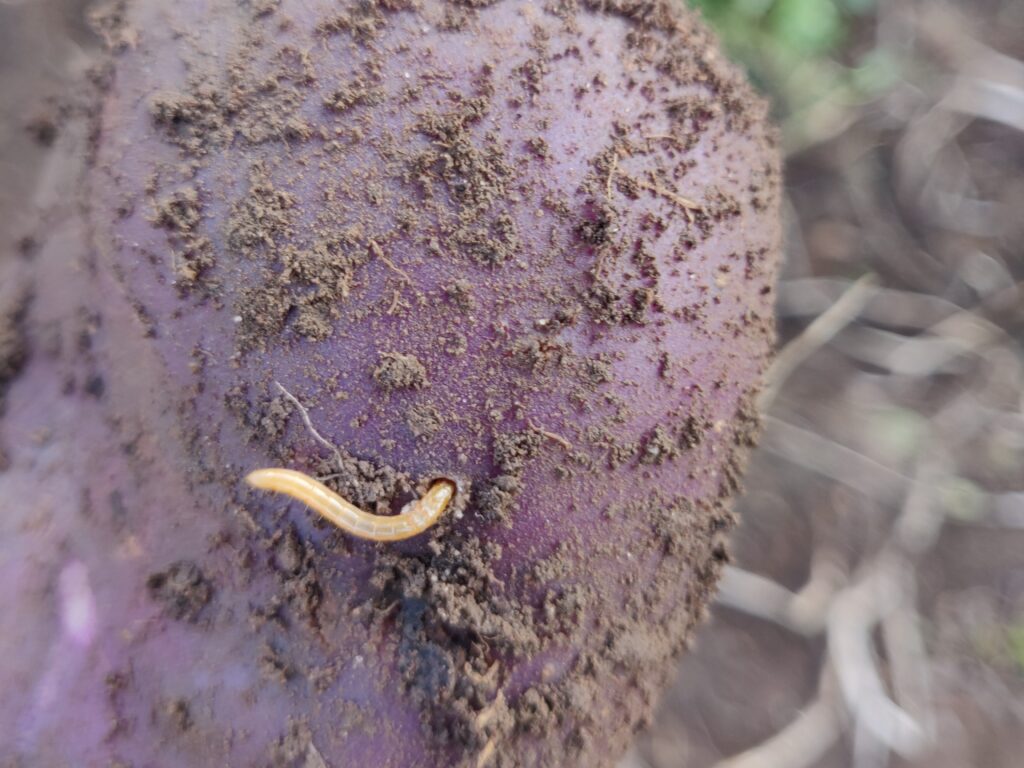
Wireworm is the larva of the click beetle and a common pest in potato fields. It creates small holes in tubers, affecting both appearance and quality. Often slugs will go in these holes after.
Dormancy
Dormancy is a natural period when harvested tubers remain in a state of inactivity, not sprouting until conditions (such as light and temperature) become favourable for growth. Usually late varieties have better dormancy than early varieties
Floury
Floury potatoes are high in starch and become fluffy when cooked, making them ideal for baking, roasting, and mashing.
Waxy/Firm
Waxy potatoes are lower in starch, with a firm, moist texture when cooked. They hold their shape well and are suited for boiling, salads, and casseroles.
High Dry Matter
High dry matter potatoes have a high percentage of solid content, making them floury in texture and ideal for baking and frying.
Water Content
Water content is the percentage of water in a potato, affecting its texture and cooking quality. High water content varieties are often waxy, while low water content varieties tend to be floury.
Storage Potato
A storage potato is one that is grown and harvested with a thicker skin, intended for long-term storage. Maincrop varieties are often grown as storage potatoes.
Table Potato
A table potato refers to varieties of potatoes that are specifically grown and harvested for direct consumption as food rather than for processing (like making chips or fries) or for long-term storage.
Salad Potato
A salad potato is typically waxy in texture, which means they hold their shape well when cooked, making them ideal for use in salads where a firm texture is desired.
Processing Potato
Processing potatoes are varieties chosen for making products like chips, crisps, and fries due to their specific characteristics, such as high dry matter and low sugar content.
Browse our full range of seed potatoes HERE.