
Multi-Species Swards/Variety-Rich Pastures


Variety-Rich Pastures
A variety-rich pasture consists of more than just Perennial Ryegrass and a small percentage of White Clover. The aim is to have at least two or more grass species, two or more clover species, and possibly the inclusion of one or more herbs like Chicory, Plantain, or Yarrow.
Benefits
Fruit Hill Farm has been offering variety-rich pasture mixtures for many years, as these are much more suitable for organic farming due to the lower need for inputs.
The main benefits of a variety-rich pasture are:
- Suitability for a low-input system.
- More consistent yields in dry or wet weather conditions.
- Increased health and satisfaction of the animals.
- Better persistence of swards.
- Better trafficability through denser sward and better root mat.
- Higher carbon capture potential.
- Lower costs and higher margins in the long term.
How to Choose the Right Mix
We can help you choose the seed mixture that suits your specific needs best. This will depend on the type of soil, the fertility status, and the intended use. The yields and quality of variety-rich pastures can still be very high, especially if attention is paid to the fertility status of the soil by taking regular soil samples. Our mixtures typically contain 5 grass species, often 2 or more clover species, and some have herbs as well.
- A mixture for a very dry field is very different from one for damp, clay-type soil.
- A mix for dairy cows is very different from one that is mainly for sheep.
List of Different Types/Species and Their Benefits
The Main Grasses in Our Mixtures Are:
- Perennial Ryegrass: High yielding early and late in the season, high digestibility.
- Timothy: Good early and mid-season growth, great for hay, and is a low-input grass.
- Meadow Fescue: High yielding low-input grass, very winter hardy, great for silage or hay.
- Tall Fescue: High persistence in very cold or very hot conditions, new varieties on the market.
- Red Fescue: Shade tolerant, able to withstand dry weather, helps create a dense sward.
- Festulolium: Very resilient high-yielding palatable grass, tolerant of drought or waterlogging.
- Smooth Meadowgrass: Highly nutritious, persistent, and early Spring growth.
- Cocksfoot: Productive, deep-rooting grass, drought and waterlogging tolerant. Keep it leafy!

The Clovers:
- White Clover (small, medium, large): Very persistent, fixes nitrogen, improves fodder quality.
- Red Clover: Deep-rooting, high-yielding, high-protein fodder, fixes nitrogen.
- Alsike Clover: Cool summer clover, tolerates low pH, damp soils, and very winter hardy.
- Birdsfoot Trefoil: High in protein, has anthelmintic and bioactive properties, fixes nitrogen.

The Herbs:
- Chicory: Highly digestible, highly palatable forage with anthelmintic properties.
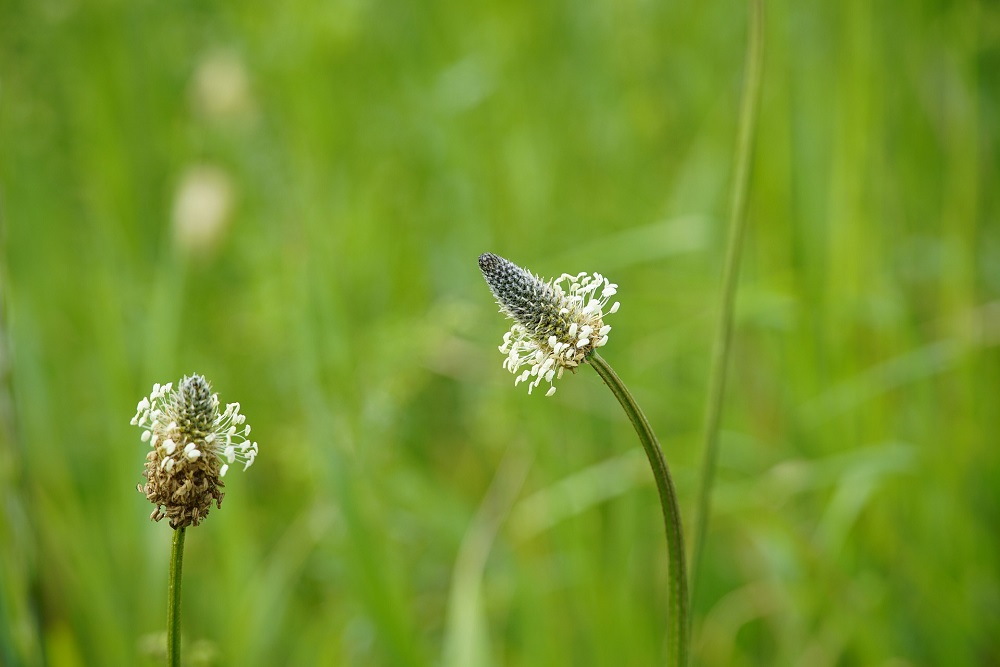
- Plantain/Ribwort: Source of copper, calcium, and selenium, deep-rooting, drought resistant.
- Yarrow: High in nutrients and minerals, soil improver, drought resistant.
- Burnet: Early spring growth, high in nutrients and minerals, soil improver, drought resistant.
- Parsley: Source of vitamins and minerals, soil improver, drought resistant.
Sowing Methods
Preferably, plough the field properly but not too deep. If this is not possible, use a disc or power harrow to break up the old sod. After this, use a leveller, fine harrow, or power harrow to make a fine, firm seedbed; possibly roll lightly if conditions are good and the field needs it. Sow the seed at a rate of approximately 14kg/acre, no deeper than 1cm, preferably with an air seeder, and roll again. It is very important to get good contact between the seed and the soil.
Overseeding or stitching in can be very successful with white clover and grasses, but it doesn’t work as well with red clover or herbs.
Establishing
Graze lightly after 8 weeks, depending on how the sward has developed. This will help the grasses to tiller and the sward to thicken up. After this, graze as normal or cut it for silage.
Where necessary, granulated lime or ground limestone and organically approved fertilisers like Sulphate of Potash and Granulated Rock Phosphate can be applied before sowing or later once the sward has established. The pH has to be maintained at a reasonable level, ideally somewhere between 6.3 and 7. Bulk chicken pellet fertiliser is now available in case FYM or slurry are not available to get the sward off to a good start. The recommended rate is 250kg/acre.
Soil Analysis
Once in a while it can be interesting to make a more detailed analysis of a soil sample to get an indication of the levels of Boron, Manganese, Copper and Zinc etc. in the soil. Severe deficiencies of any of these can affect the yield and quality of the grass, clovers and herbs.
Recent research has increasingly highlighted the critical role of boron in the development of all crops. There is only a narrow band between a deficiency and toxicity of Boron, so one has to be careful not to apply too much.