Choosing a Flower Meadow Mix

Choosing a Flower Meadow Mix
Flower meadows are a great way to bring colour to your garden or land and provide numerous benefits to wildlife.
Traditional flower meadows originated from the farming practice of making hay, and as such were cut every year for the cattle to have feed over winter. To keep them flowering well, they need to be mown or cut after the seed has set in late summer/early autumn, and the mowed material needs to be removed. Traditional hay meadows were established for a long time and not heavily fertilised and this meant that the wildflowers had a chance to grow and flower year after year.
Be aware that any of the mixtures below need to be sown in bare soil that has been well prepared and is reasonably free of perennial weeds. It is best to start preparing the soil well in advance. The soil should not be very fertile for the first two flower meadows. Fertile soils will favour grasses and other weeds taking over before the wildflowers have a chance to get established. The Annual and Perennial Bee meadow need a slightly more fertile soil as there are more cultivated species in them.
Please see below the four different flower meadow mixes to choose from at Fruit Hill Farm. Because it is hard to know which one is best for your situation, here is a short guide to choosing the right meadow mix for you.
Perennial for gardens, flower beds and small areas, but also larger areas:
Bee and Butterfly Flower Meadow Mix
- 100% flower mix containing species that are native to Ireland
- Selected specially to create a high quality habitat for wild bees and butterflies
- In winter birds will feed on the seeds.
- It can be applied along paths, on ledges and also in long-term field margins
- Annual species ensure first year flowering plants, replaced by attractive perennial varieties in subsequent years
- Not organic - conventional, untreated seeds
- Height - up to 140cm
- Costs €35 for 100g - covers 75m²
- Click here for list of species
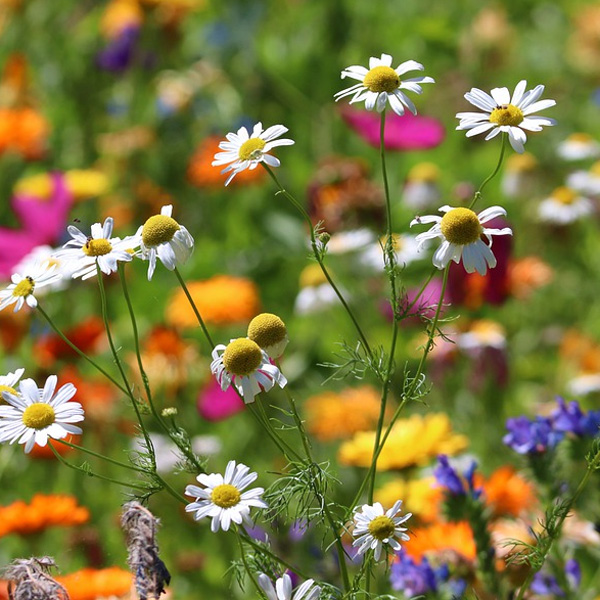
- 50% flowers and 50% grass mix - containing species that are native to Ireland
- Suitable for a wide range of soil types and situations
- A colourful, species-rich flower meadow offering a variety of low to high grasses and flowers
- The grasses give more soil coverage over winter and help to suppress weeds
- Height of 80-100 cm
- Costs €35 for 150g - covers 50m²
- Click here for list of species

The above mixes contain seeds that are found native to Ireland, and the second one will produce a flower meadow more reminiscent of a hay meadow. Although these seeds are fairly expensive to sow over a large area they are real wildflowers. If you have a large area and wish to create an excellent nectar source and provide good forage and cover for wildlife, there are other options that are more cost effective as well as being organic (see below).
The mixtures below are made up of a mix of organic wildflowers, herbs and green manure seeds.
The best time to sow any of the flower meadows is in the spring. It is possible to sow any of the mixtures in the Autumn - however there are some annuals in this mix, so if they were to germinate, they may not survive the Winter, which could lead to some losses.
Annual/Bi-annual for gardens, flower beds and small areas, and especially for large areas:
- The quick growing annual bee meadow will provide a continuous display of nectar and pollen-rich legumes, brassicas and other flowers.
- Though some varieties will self seed, it is best to re-sow every year
- 100% organic seed.
- Sow in spring
- Costs: €5.90 for 200g - covers 125m²
- €132.50 - 10kg per 6,000m2 (1.5 acres)
- Click here for list of species
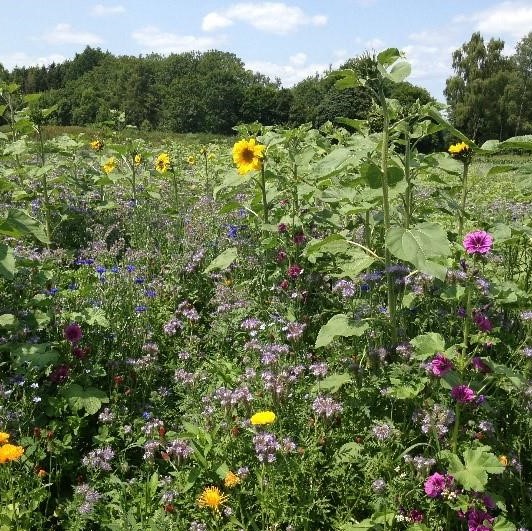
Bee Meadow Seed Mix (Perennial)
- A very rich mix of seeds that will provide plenty of browsing for bees.
- Contains 20 different varieties.
- Does not contain any Brassica species so won’t interfere with other crops.
- 100% organic seed.
- Sow in spring
- Costs: €7.50 for 250g - covers 100m2
- €159.50 for 10kg - covers4,000m2 (1 acre)
- Click here for list of species
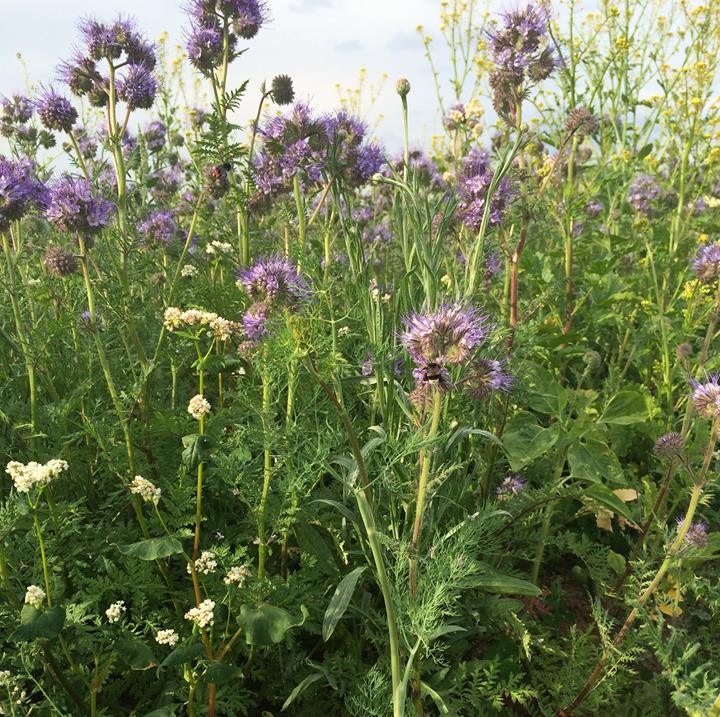
And of course, you can also mix and match some of the above varieties. For example, you could plant the bulk of the area with the Perennial Bee Meadow seed mix (which is more cost effective), and then plant strips around the edge with the wildflower mixes, which give a greater range of colour and have a more natural look.

Or choose the Variety rich pasture mix 4.4 that contains white and red clover and 5% herbs to cover the bulk of the area, and add sections of the wildflowers. There are so many possibilities or combinations; the world is your oyster!
