Cabbage White Butterfly
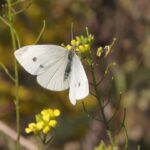

Cabbage White Butterfly
Cabbage White Butterflies can be a significant pest for gardeners growing brassicas like cabbage, broccoli, and cauliflower. They lay their eggs on the undersides of the leaves and the resulting caterpillars voraciously feed on the plants, causing significant damage.
The Cabbage White butterfly refers to two similar species: the small white (Pieris rapae) and the large white (Pieris brassicae).
Small White (Pieris rapae):
- Medium-sized, pure white with two small black eyespots and short black tips on the forewings.
- Active from April to October, peaking in May and August.
- Typically has two broods per year, sometimes three in good weather.
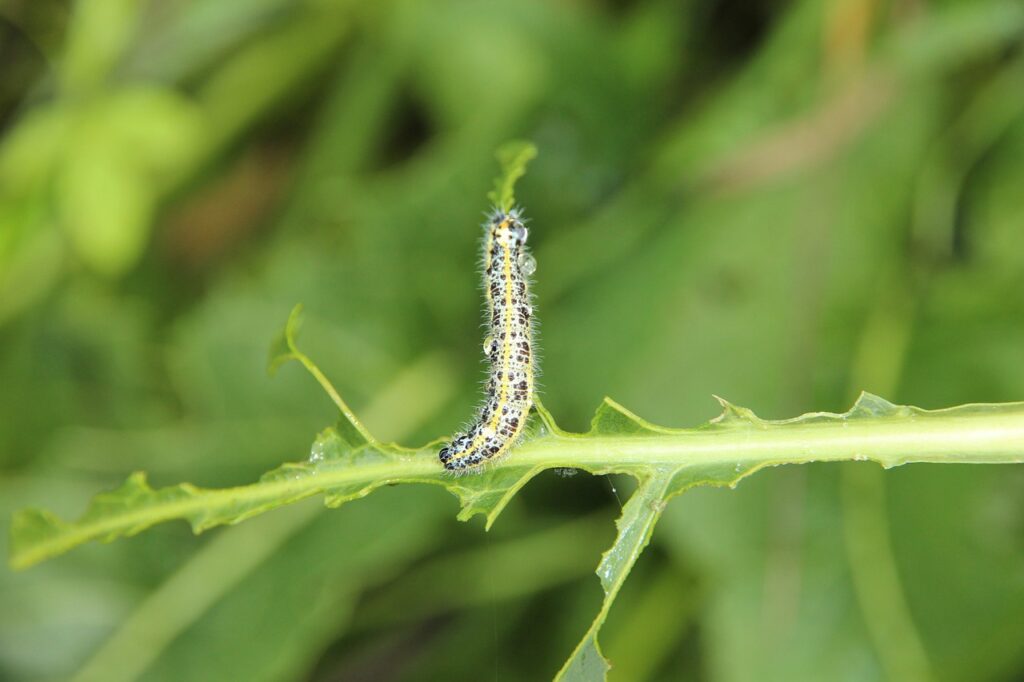
- Caterpillars are pale green with faint yellow stripes and short, velvet like hairs. About 2.5cm in length.
Large White (Pieris brassicae):
- Larger than the small white, both males and females have white wings with black tips. Females also have eyespots.
- Active from April to October, peaking in May and August.
- Usually has two broods per year.
- Caterpillars are green with black spots, yellow stripes along their length and hairs. About 4cm in length.
Both species lay their first eggs in April-May. The caterpillars emerge in May and June, feeding immediately. By June and July, they pupate into adult butterflies. These summer adults lay eggs in June and August. The resulting caterpillars overwinter as pupae, emerging as adults in spring.
Identifying Caterpillar Damage
- Holes in Leaves: Irregularly shaped holes in the leaves, often starting from the edges.
- Skeletonised Leaves: Leaves that are eaten, leaving only the veins intact.
- Frass: Presence of caterpillar droppings, which look like tiny dark green pellets, on leaves and around the plant base.
- Stunted Growth: Severe infestations can lead to significant loss of foliage, stunting plant growth.
What Can Be Done?
By identifying the type of caterpillar and recognising the damage early, you can employ these organic control methods to protect your cabbage and other brassicas effectively. Regular monitoring and a combination of these strategies will help keep your garden healthy and productive.
- Handpicking: Regularly inspect plants and manually remove caterpillars and eggs. Make sure to dispose of them far away from your garden.
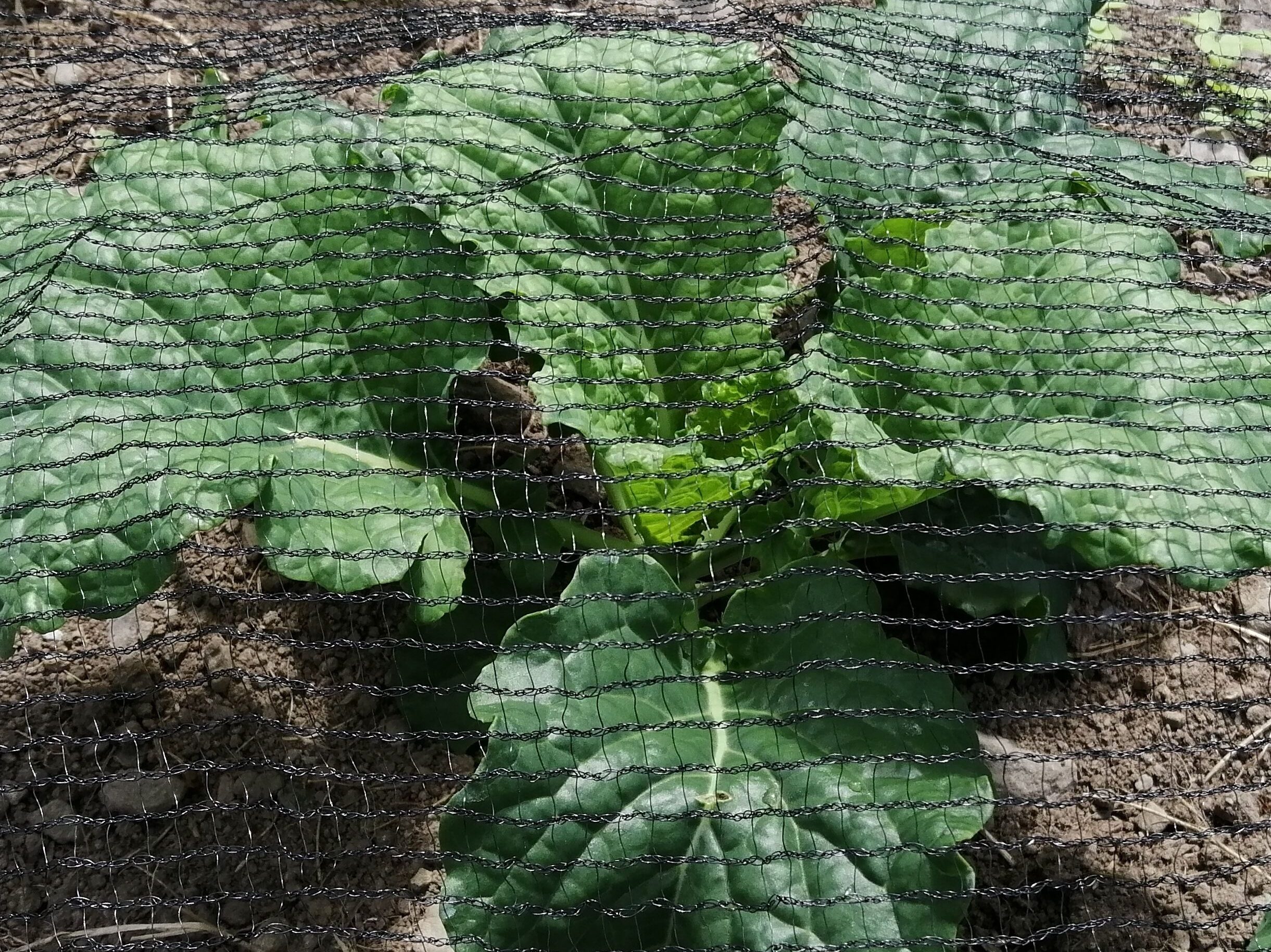
- Netting: Cover plants with netting to prevent adult butterflies from accessing the plants and laying their eggs. Make sure the netting is well secured and not resting on the leaves to prevent butterflies laying through it.
- Companion Planting: Grow plants like dill, sage, and marigolds nearby to repel caterpillars and attract beneficial insects. You can also Intercrop with nasturtiums, which act as a trap crop.
- Crop Rotation: Following a crop rotation will help disrupt the lifecycle of pests.
- Plant Strengtheners: Feed brassica crops with plant strengtheners such as AMN Biovit or Herfosec. Biovit is a garlic concentrate which masks the smell of the plants and also improves growth. Herfosec is a herbal concentrate that strengthens the plants and makes the plants less prone to attack.
- Beneficial Insects: Encourage natural predators like parasitic wasps and birds.
- Biological Control: Bacillus thurengiensis (Bt) is a biological insecticide for the control of caterpillars on a range of fruit and vegetable crops.
It's important to remember that a small number of caterpillars is not necessarily a problem. In fact, they play a role in the ecosystem by serving as food for birds and beneficial insects. Maintaining a balance is key; a few caterpillars won't significantly harm your plants and can contribute to a healthy garden ecosystem. Embrace natural predators and encourage biodiversity in your garden to create a self-sustaining environment.